
Kolkata: Reinforcing its commitment to advanced patient care and medical excellence, Manipal Hospital Broadway, a leading unit of Manipal Hospitals Group, has successfully performed a highly complex Endovascular Aneurysm Repair (EVAR) on a 67-year-old male patient from Mizoram. The patient was diagnosed with a large abdominal aortic aneurysm — a potentially life-threatening enlargement of the body’s main abdominal artery.
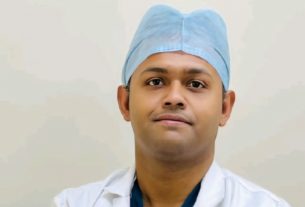
The high-risk procedure was executed by a specialized cardiovascular and vascular team led by Dr. Subhasis Roy Chowdhury, HOD–Cath Lab and Dr. Jayanta Das, Department of Vascular Surgery, Manipal Hospital Broadway.
The patient had been experiencing persistent lower abdominal pain for nearly a year, and diagnostic evaluations revealed a severely dilated abdominal artery with a high risk of sudden rupture — a medical emergency that could result in fatal internal bleeding. Considering the elevated risks associated with open abdominal surgery, EVAR was selected as the most suitable and minimally invasive option.
EVAR involves placing a covered stent through small incisions in the groin to seal and stabilize the weakened artery segment. The carefully planned procedure ensured reduced surgical trauma, less blood loss and a significantly shorter recovery period. The patient responded well post-surgery and was discharged within two days, highlighting the effectiveness and patient-friendly nature of the technique.
Speaking about the case, Dr. Subhasis Roy Chowdhury said,
“Aneurysms of this size are silent threats. Many patients continue living with mild symptoms, unaware of the severe danger within. With EVAR, we were able to intervene at the right time and offer a safer alternative, especially for elderly patients. The precision, timing and teamwork involved were essential in preventing a potentially catastrophic medical emergency. This case reaffirms how advanced vascular interventions can save and transform lives.”
Sharing his perspective, Dr. Jayanta Das added,
“Abdominal aortic aneurysms often progress quietly until they become critically dangerous. In this patient’s case, timely diagnosis and opting for EVAR were decisive factors. The procedure required advanced imaging, meticulous planning and flawless execution. We are pleased to have provided a minimally invasive solution that not only avoided the risks of open surgery but ensured a faster and safer recovery. This case truly showcases the impact of modern vascular care in improving patient outcomes and quality of life.”