
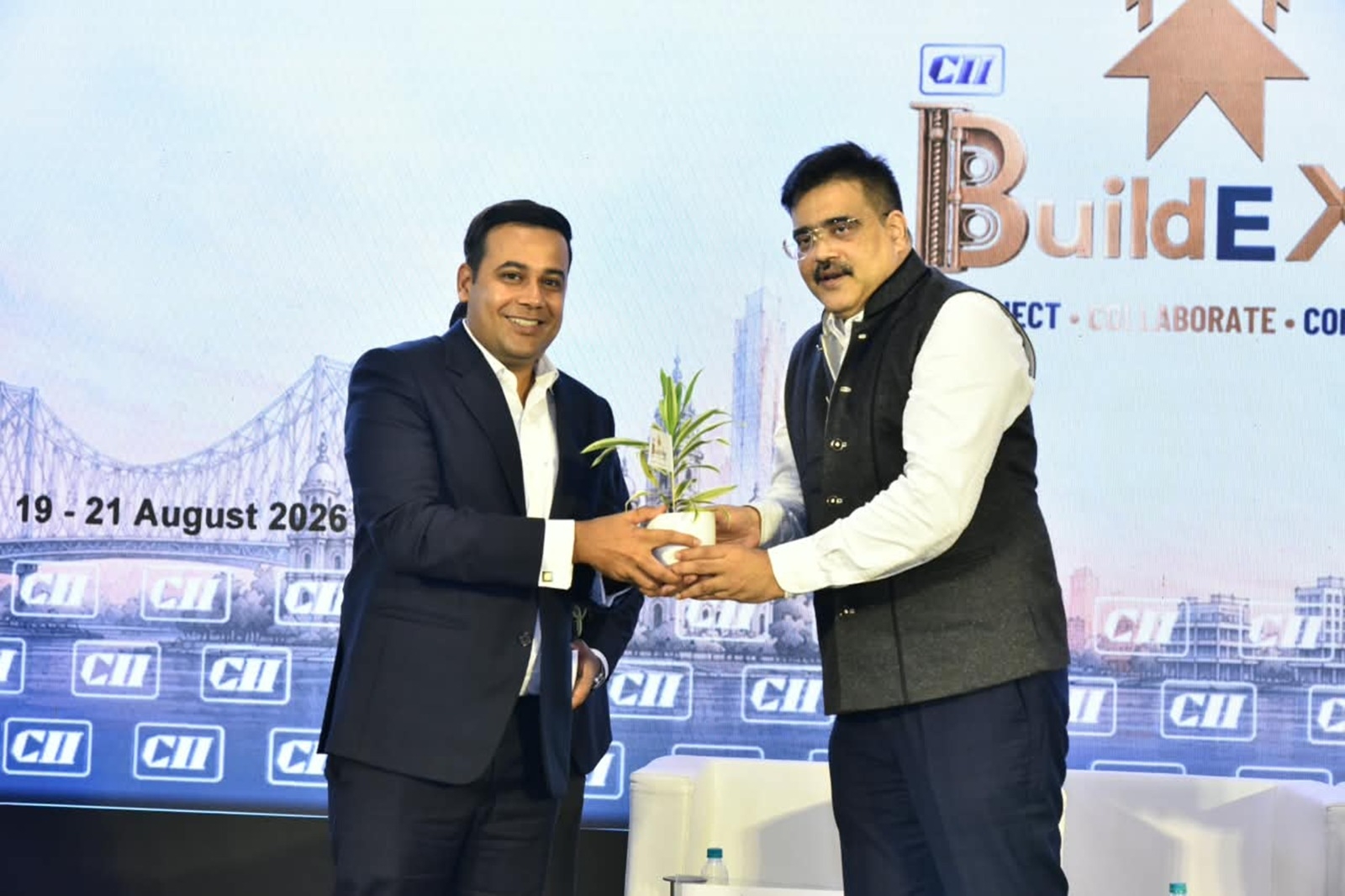
Kolkata: India’s residential real estate market is witnessing a shift in demand, with mid-income housing emerging as one of the key opportunities for future growth. The segment came into focus at CII Realty East 2026, where Suhel Saraf, Managing Director, Sugam Group, participated as a panellist in a discussion on India’s mass and mid-income housing opportunity.
Saraf was part of the panel titled “The Missing Middle: Unlocking India’s Mass & Mid-Income Housing Opportunity”, held under the broader theme “Housing for the Many: Unlocking the Next Wave of Residential Growth” at Biswa Bangla Exhibition Centre, Kolkata.
The session brought together industry leaders to discuss how India can expand housing opportunities while balancing affordability, quality, sustainability and long-term liveability. The discussion also highlighted the growing importance of the mid-income segment, particularly homes priced between ₹80 lakh and ₹1.5 crore, alongside the significant unmet demand in affordable and mass housing.
Speaking during the discussion, Saraf emphasised that affordable housing needs to be viewed beyond the initial purchase price. He highlighted the need for efficient land utilisation, thoughtful design, sustainable construction and innovative financing models to reduce both the upfront cost and the long-term cost of home ownership.
“The definition of affordable housing needs to evolve with the changing realities of India’s middle-income population. A home that was considered affordable five years ago may no longer be so today, given the rise in land, construction and ownership costs,” Saraf said.
He added that the focus should not simply be on building smaller or lower-priced homes, but on creating housing that remains affordable throughout its lifecycle. According to him, supportive land policies and appropriate government incentives will also be important for developers to scale such housing models.
Saraf further stressed that affordable housing requires coordination between developers, policymakers, financial institutions and the wider infrastructure ecosystem to make quality and sustainable home ownership more accessible to India’s growing middle class.
The discussion comes as Eastern India continues to see urban expansion, improving connectivity and growing demand for organised residential developments. The mass and mid-income housing segments are therefore expected to play an important role in expanding home ownership and supporting sustainable urbanisation across the region.
CII Realty East 2026 brought together developers, policymakers, architects, planners, financiers and industry experts to deliberate on real estate, infrastructure, design, sustainability and housing in Eastern India. The event also featured sessions on green and net-zero buildings, technology and innovation in real estate, public infrastructure, investment models and commercial real estate