
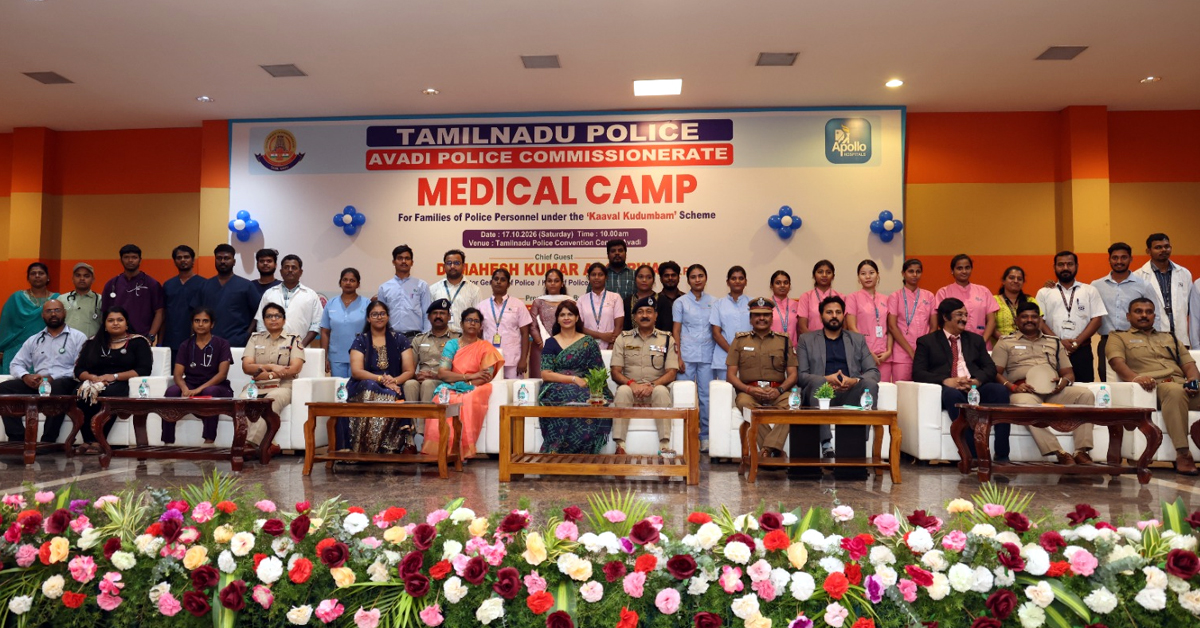
More than 500 beneficiaries receive health screenings for diabetes, hypertension and other non-communicable diseases
Chennai : More than 500 police personnel and their family members attended a health camp organised by Apollo Speciality Hospitals, Vanagaram, in collaboration with the Avadi Police Commissionerate under Tamil Nadu Police’s ‘Kaval Kudumbam’ welfare scheme.
The camp was held at the Avadi Police Convention Centre with a focus on the early detection and prevention of non-communicable diseases (NCDs), particularly diabetes and hypertension. The initiative aimed to encourage regular health check-ups among police personnel and their dependants, helping identify potential health risks before they develop into serious complications.
Police personnel often work under demanding conditions, with long duty hours and high levels of stress. Regular medical assessments can play an important role in managing health risks and ensuring their long-term well-being.
Dr Mahesh Kumar Aggarwal, IPS, Director General of Police and Head of Police Force, Tamil Nadu, attended the programme as the chief guest. Dr Vaneetha Aggarwal, president of Kaval Kudumbam, presided over the event.
Speaking at the programme, Kaarthik Ramamurthy, Chief Operating Officer of Apollo Speciality Hospitals, Vanagaram, Chennai, highlighted the importance of making preventive healthcare more accessible to police personnel and their families. He said initiatives such as Kaval Kudumbam could encourage early diagnosis and help families make informed decisions about their health.
The health camp also highlighted the importance of cooperation between healthcare institutions and public agencies in expanding access to medical services. Early screening for diabetes and hypertension is particularly significant, as both conditions can remain undetected for extended periods and may lead to serious complications if left unmanaged.
Through such collaborative initiatives, healthcare providers and public institutions seek to strengthen preventive healthcare awareness and promote timely medical intervention among communities.


