
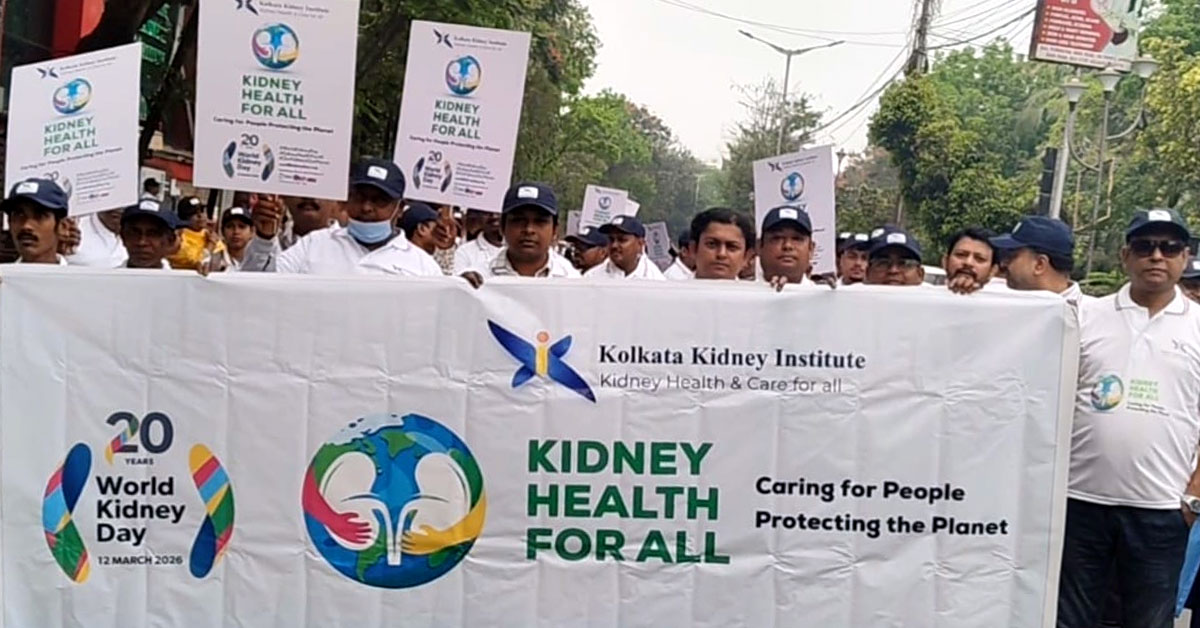
Kolkata, March 12, 2026: Marking World Kidney Day, more than 100 healthcare professionals, patients and concerned citizens participated in a Kidney Health Awareness Walk organised by the Kolkata Kidney Institute on Thursday in Kolkata. The walk began from the institute’s premises on Kalikapur Road and proceeded towards Ruby General Hospital, drawing attention to the urgent need for early screening and preventive care for kidney diseases.
The initiative was led by veteran nephrologist Dr. Pratik Das, who highlighted that kidney diseases are emerging as a major public health concern in India. Addressing the media and participants, Dr. Das noted that the disease often progresses silently, with many patients remaining unaware of the condition until it reaches advanced stages.

According to recent health studies, the burden of Chronic Kidney Disease (CKD) in India has increased significantly over the past decade. The prevalence of CKD has risen from about 11% between 2011 and 2017 to nearly 16.4% during 2020–2025, indicating a sharp rise in kidney-related disorders in recent years. India currently has an estimated 138 million people living with chronic kidney disease, one of the highest numbers globally.
Health experts attribute this alarming increase primarily to diabetes, hypertension, obesity, unhealthy lifestyle habits, excessive use of painkillers, poor water quality and lack of routine screening, particularly among high-risk populations.
Speaking at the event, Dr. Das stressed the importance of awareness and prevention.
“Kidney disease is often called a silent killer because symptoms appear only when significant damage has already occurred. Simple tests and timely lifestyle changes can prevent or slow the progression of kidney disease,” he said.
He further added, “Kidney disease does not just affect an individual — it impacts entire families emotionally, socially and financially. Many patients reach us at a stage when prevention is no longer possible and lifelong dialysis becomes the only option. This is why awareness and early detection are not only medical priorities but social responsibilities as well.”
Early Prevention is Key
Health experts emphasise that early prevention remains the most effective strategy to reduce the burden of chronic kidney disease. Doctors recommend maintaining a balanced diet, staying physically active, controlling blood pressure and blood sugar levels, and drinking adequate amounts of clean water.
Regular health check-ups — especially for people with diabetes, hypertension or a family history of kidney disease — can help detect kidney problems at an early stage. Avoiding excessive use of painkillers and self-medication is also crucial for protecting long-term kidney health.
Holistic Kidney Care for the Masses
Through initiatives such as the awareness walk, the Kolkata Kidney Institute aims to promote early detection and encourage people to adopt healthier lifestyles. The institute offers comprehensive nephrology and urology services, including dialysis support, kidney transplant care, critical care nephrology and advanced diagnostic facilities.
A key focus of the institute is to make specialised kidney treatment accessible and affordable, particularly for patients from middle- and lower-income backgrounds who often struggle with the high costs associated with long-term dialysis and treatment.
With modern medical infrastructure and a multidisciplinary team of specialists, the institute strives to deliver patient-centric care while continuously spreading awareness about prevention and early diagnosis.
The World Kidney Day awareness walk also served as an important reminder for citizens about the significance of regular health check-ups, proper hydration, controlling blood pressure and diabetes, and avoiding indiscriminate use of medications — all of which play a crucial role in protecting kidney health.


