
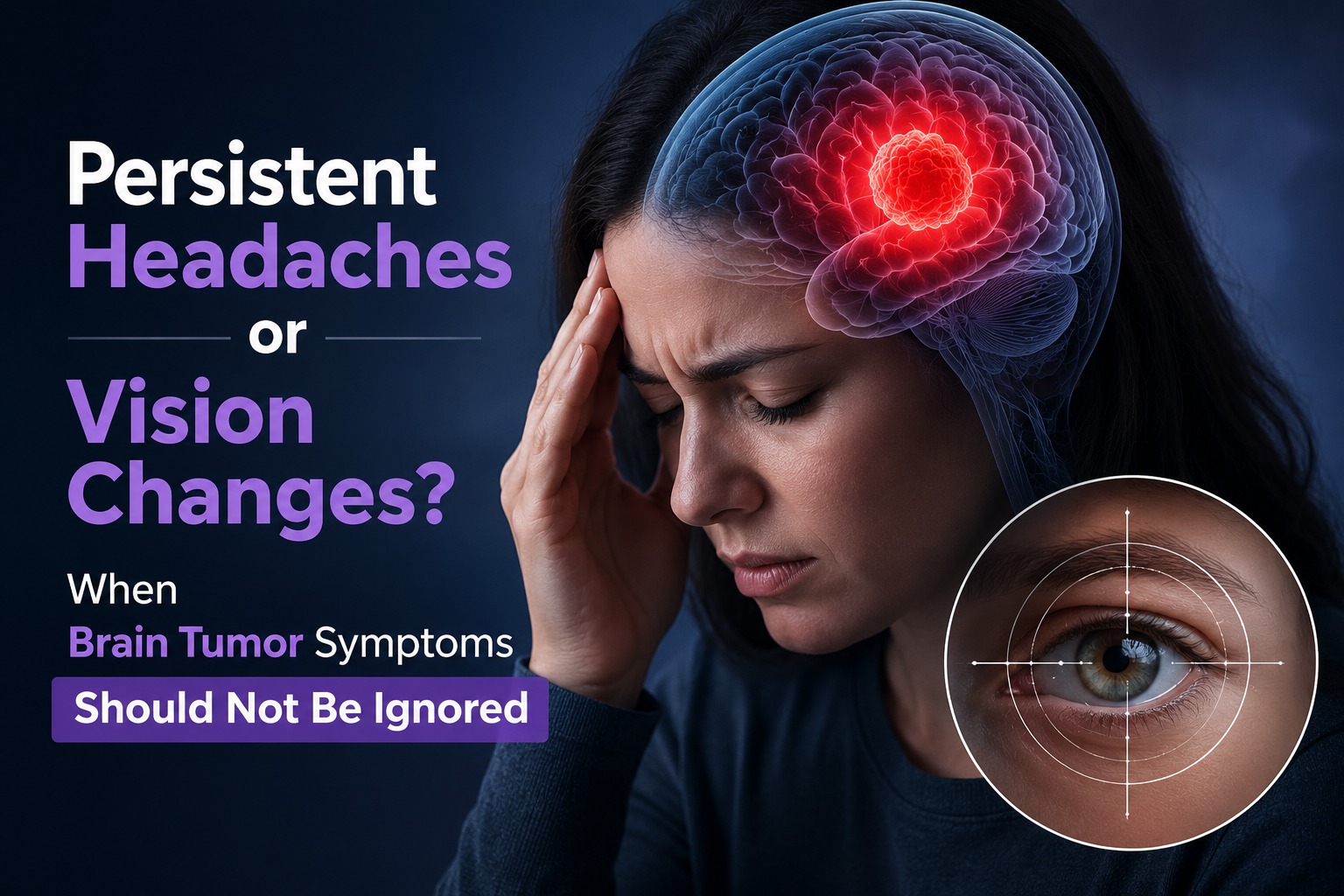
Kolkata : Headaches, blurred vision, dizziness, and nausea are common complaints that many people often dismiss as routine health issues. However, medical experts warn that when such neurological symptoms become persistent, recurrent, or progressively severe, they may indicate a more serious underlying condition, including a brain tumor.
Marking World Brain Tumor Day, Dr. Nilay Biswas, Senior Consultant – Neuro Surgery at Narayana Hospital Howrah, emphasized the importance of recognizing early warning signs and seeking timely medical evaluation.
According to Dr. Biswas, one of the biggest challenges in diagnosing brain tumors is that their early symptoms often resemble everyday health problems. Persistent headaches are among the most common warning signs, particularly when they occur more frequently in the morning, worsen over time, or are accompanied by vomiting.
Vision-related problems such as blurred vision, double vision, or sudden difficulty focusing may also occur, depending on the location of the tumor within the brain.
“Many patients initially ignore these symptoms or self-medicate with painkillers, which can delay diagnosis and treatment,” Dr. Biswas said.
Neurological changes can also serve as important warning signals. Patients may experience difficulty maintaining balance while walking, weakness in the arms or legs, numbness, speech difficulties, memory problems, or personality changes. Seizures occurring for the first time during adulthood are considered a major red flag and require immediate medical attention.
While brain tumors can be either benign or malignant, experts stress that early detection significantly improves treatment outcomes and quality of life. Delayed diagnosis can allow the tumor to grow, increasing pressure within the skull and affecting vital brain functions.
Doctors recommend prompt neurological assessment and imaging investigations such as MRI and CT scans when symptoms persist. Advances in imaging technology now allow earlier detection and more precise treatment planning than ever before.
Dr. Biswas noted that brain tumor treatment has seen remarkable progress over the past decade. Modern neurosurgery increasingly relies on minimally invasive and precision-guided techniques designed to reduce damage to healthy brain tissue. Technologies such as neuronavigation systems, intraoperative imaging, and microscopic surgery have enhanced the safety and accuracy of tumor removal procedures.
In selected cases, minimally invasive approaches can result in smaller incisions, reduced blood loss, shorter hospital stays, and faster recovery. Additionally, targeted therapies, advanced radiation treatments, and personalized care plans are improving outcomes for many patients.
Treatment often involves a multidisciplinary team comprising neurosurgeons, neurologists, oncologists, radiation specialists, and rehabilitation experts working together to provide comprehensive care.
Health experts caution that not every headache or episode of dizziness indicates a brain tumor. However, persistent or unexplained neurological symptoms that interfere with daily activities or continue to worsen should never be ignored.
On World Brain Tumor Day, doctors urge the public to remain aware of potential warning signs and seek expert medical evaluation when necessary. Early diagnosis and timely treatment can help preserve neurological function, improve quality of life, and, in many cases, save lives.