
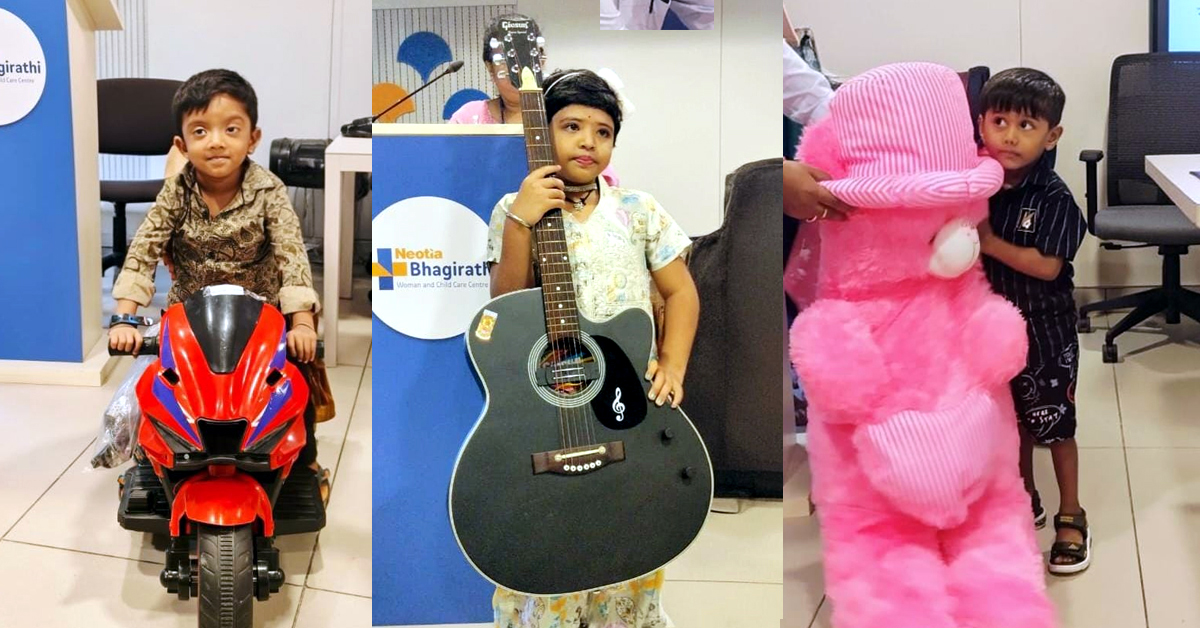
Kolkata: Three children who underwent a complex heart surgery within a month at Neotia Bhagirathi Woman and Child Care Centre (NBWCCC), New Town, became the focus of a medical discussion on Monday, with paediatric cardiac specialists explaining the challenges involved in treating a rare congenital heart condition.
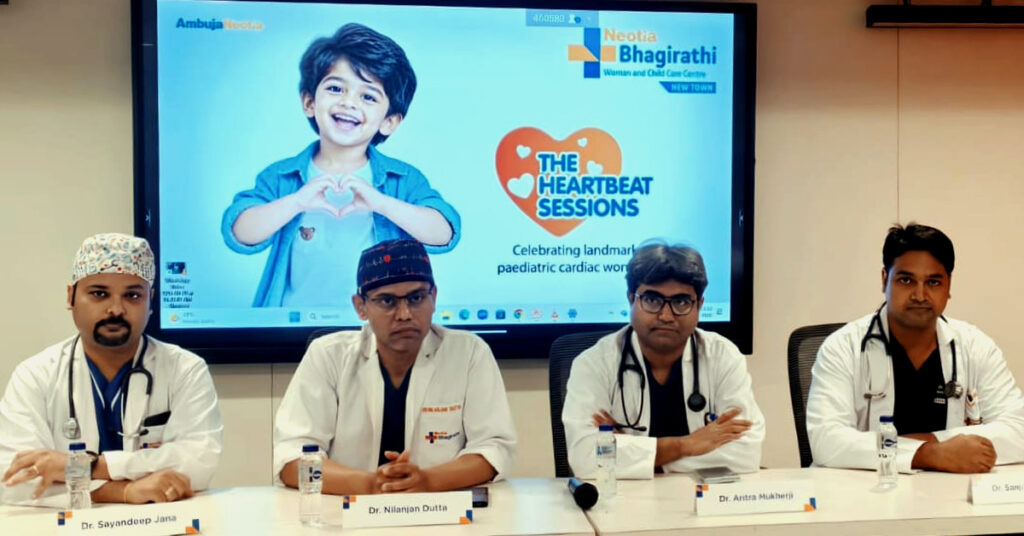
The cases were discussed at ‘The Heartbeat Sessions’, organised ahead of World Heart Day. All three children had Congenitally Corrected Transposition of the Great Arteries (ccTGA), a rare congenital heart defect in which the heart’s chambers and major blood vessels are connected differently from the usual anatomy.
The children underwent a Double Switch Operation (DSO), a complex procedure aimed at restoring the heart’s circulation to a more physiologically normal pattern. The hospital said all three patients were doing well during follow-up.
One of the children and family members also spoke about their experience, including the period from diagnosis through treatment and recovery.
The medical team said ccTGA can remain undetected during the early years in some children because the circulation is initially able to function adequately. However, the condition can eventually put the right-sided ventricle under greater strain and may lead to heart-related complications.
Why the surgery is complex
A Double Switch Operation involves more than simply correcting the position of the major arteries. Depending on the child’s anatomy, surgeons may use procedures such as the Senning and Rastelli techniques to redirect blood flow. The complexity of the operation means that detailed assessment of heart function and anatomy is required before surgery.
Dr Nilanjan Dutta, Senior Consultant Paediatric and Congenital Cardiac Surgeon, said the decision to perform the procedure requires detailed discussion with the family because of both the complexity of the surgery and the possibility of future complications.
He pointed to the risk of heart block in patients with ccTGA and said children undergoing the procedure need regular cardiac follow-up. He also noted that patients undergoing Senning-Rastelli procedures may require future intervention involving the conduit used in the operation.
The postoperative period is also critical. According to Dr Sayandeep Jana, Consultant Cardiac Anaesthesia and Critical Care, children undergoing DSO require close monitoring of heart rate, rhythm and cardiac output in the intensive care unit. Patients are generally kept on mechanical ventilation overnight, with echocardiography used to assess heart function before extubation.
Pre-surgical evaluation is equally important, said Dr Aritra Mukherji, Consultant Interventional Paediatric and Foetal Cardiology. He said the child’s heart function needs to be assessed carefully before anatomical correction is considered.
Dr Sanjiban Ghosh, Consultant Interventional Paediatric and Foetal Cardiology, stressed that follow-up does not end after the operation. Some patients may need catheter-based intervention in the future, while heart block can lead to the requirement for a permanent pacemaker.
Three surgeries in a month
The three Double Switch procedures performed within a month brought attention to the need for specialised paediatric cardiac teams capable of handling rare and anatomically complex congenital heart conditions.
During the session, the hospital also shared figures for its paediatric cardiac programme, reporting 252 cardiac surgeries and 477 catheterisation laboratory interventions, including complex and high-risk procedures.
Congenital heart disease remains an important cause of illness among children in India. While many congenital heart conditions can be detected and treated early, rare conditions such as ccTGA can require prolonged monitoring and highly specialised surgical planning.
Doctors at the session stressed that symptoms such as poor weight gain, repeated respiratory infections, bluish discolouration of the lips or nails, or an abnormal heart sound should not be ignored. Early assessment can help determine whether a child has an underlying cardiac problem.
Focus shifts beyond surgery
The session also saw the announcement of a collaboration between the hospital’s paediatric cardiology department and Make-A-Wish India’s Kolkata Chapter.
Under the initiative, children who have completed difficult cardiac treatment journeys may be identified for participation in the organisation’s wish-fulfilment programme. The initiative is intended to give children an opportunity to celebrate milestones after prolonged medical treatment.
The specialists, meanwhile, emphasised that children who undergo complex congenital heart surgery require long-term, often lifelong, cardiac surveillance. Even when the immediate surgical outcome is satisfactory, doctors said monitoring remains necessary to detect rhythm problems, conduit-related complications or other late effects as the child grows.