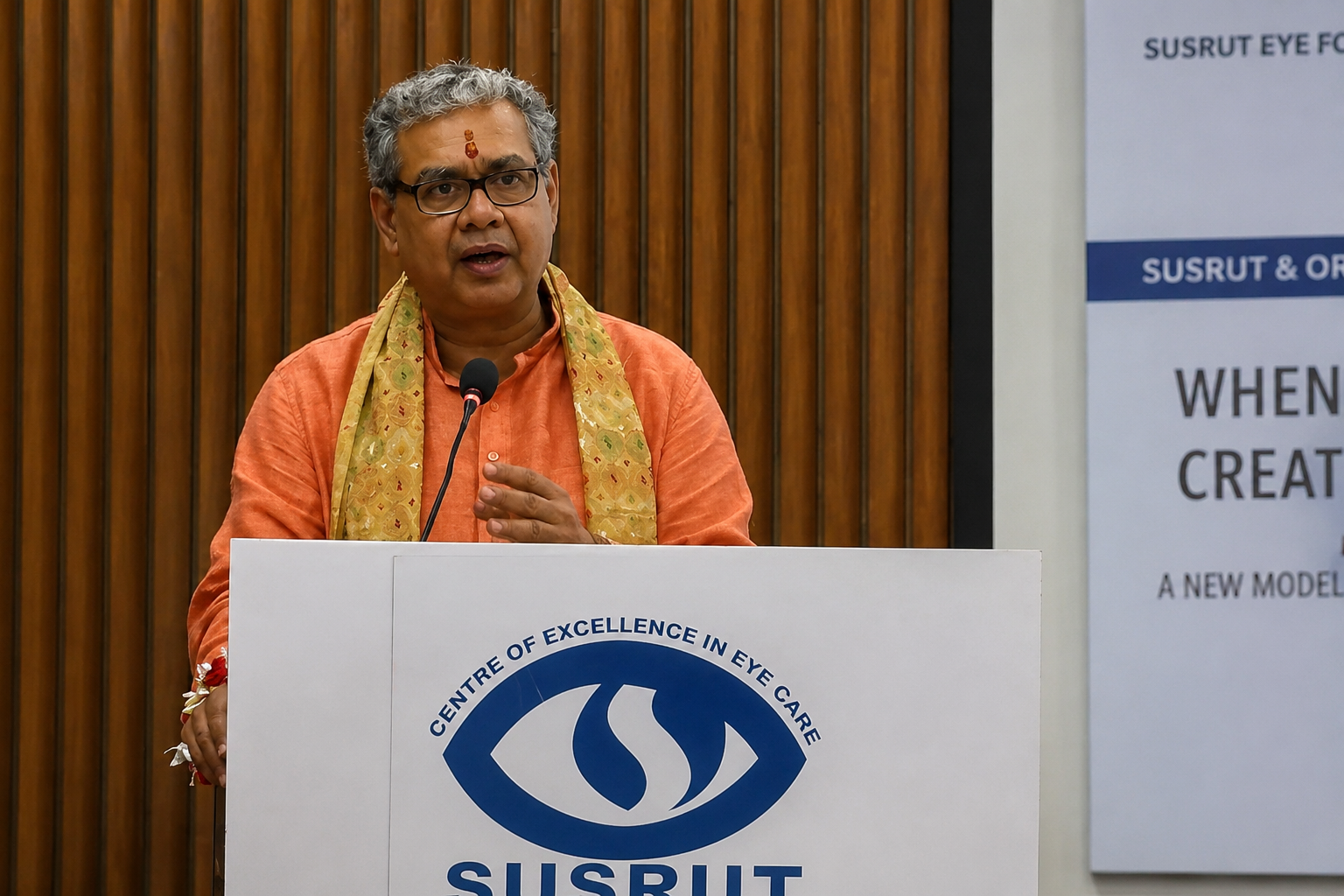
Kolkata: Eye care in West Bengal is increasingly moving beyond hospitals and specialist centres, with a new partnership between Susrut Eye Foundation & Research Centre and Orbis International focusing on community-based care, women’s empowerment, technology and local livelihoods.
The partnership aims to strengthen access to primary eye care by combining Susrut’s community network in Bengal with Orbis International’s expertise in eye-care training, technology and global partnerships.
102 Vision Centres Reach 5.7 Million People
Susrut currently operates 102 Vision Centres across 10 districts of West Bengal, covering a combined primary catchment population of around 5.7 million people. More than 3 lakh patients access services through the network every year.
In 2026, the Vision Centre network has conducted more than 3,600 vision camps, while the network facilitates approximately 19,704 referral surgeries annually.
According to Susrut, the Vision Centres are designed not just as healthcare delivery points but also as locally managed micro-enterprises.
During 2025–26, Susrut trained 140 vision-care technical personnel as local micro-entrepreneurs. Around 92% were recruited from the communities they serve, while 63% were women.
These centre managers are trained and supported by Susrut to provide basic eye-care services, identify patients requiring further treatment and facilitate referrals to appropriate facilities.
Focus on Women and Local Livelihoods
The partnership also places women at the centre of the community eye-care model.
Women often face barriers to timely eye-care access because of financial dependence, caregiving responsibilities, mobility restrictions and limited access to health information. Susrut’s model seeks to address this by creating opportunities for women to become trained healthcare providers and entrepreneurs within their own communities.
A woman managing a Vision Centre can help families identify eye-health problems, encourage timely treatment and assist patients throughout the referral and treatment process.
The model therefore links healthcare access with livelihood creation, professional skills and greater economic participation of women.
Technology to Bridge the Distance
Technology is expected to be another key component of the Susrut-Orbis collaboration.
The two organisations will explore the use of digital technologies, connected diagnostic systems, tele-ophthalmology, remote consultations and data-driven referral mechanisms to strengthen the Vision Centre network.
For a geographically diverse state such as West Bengal, such technologies could help connect patients in underserved communities with specialist expertise without making physical distance the primary barrier to care.
Community Care Before Hospital Treatment
Susrut performed more than 85,000 surgeries across its network during 2025–26. However, the organisation’s community-based approach focuses on identifying eye problems much earlier.
Screening at community camps, household-level interactions and consultations at Vision Centres can help identify patients who need specialist examination or surgery.
For children struggling to see in classrooms, adults at risk of diabetic eye disease or elderly people living with cataract, early identification and referral can play an important role in preventing avoidable vision loss.
The broader eye-health challenge is also closely linked with other health and social factors. Nutrition, Vitamin A status and immunisation are important in preventing childhood vision problems, while the growing burden of diabetes is increasing the risk of diabetic eye disease among adults.
Building a Sustainable Eye-Care Ecosystem
The Susrut-Orbis partnership seeks to develop a model in which healthcare, technology and livelihoods work together.
Instead of limiting eye care to hospital-based treatment, the model aims to build stronger community-level systems where local healthcare workers, technology and referral networks can help patients move from awareness and screening to diagnosis, treatment and follow-up.
Ratish Chandra Paul, Secretary, Susrut Eye Foundation & Research Centre, said the initiative reflects the organisation’s broader approach of taking eye care closer to communities while building local capabilities.