Kolkata: What does life look like after a Stage IV cancer diagnosis? For some patients, the answer lies in returning to ordinary routines—riding a motorcycle, shopping for groceries, travelling with family or simply planning for the next year.
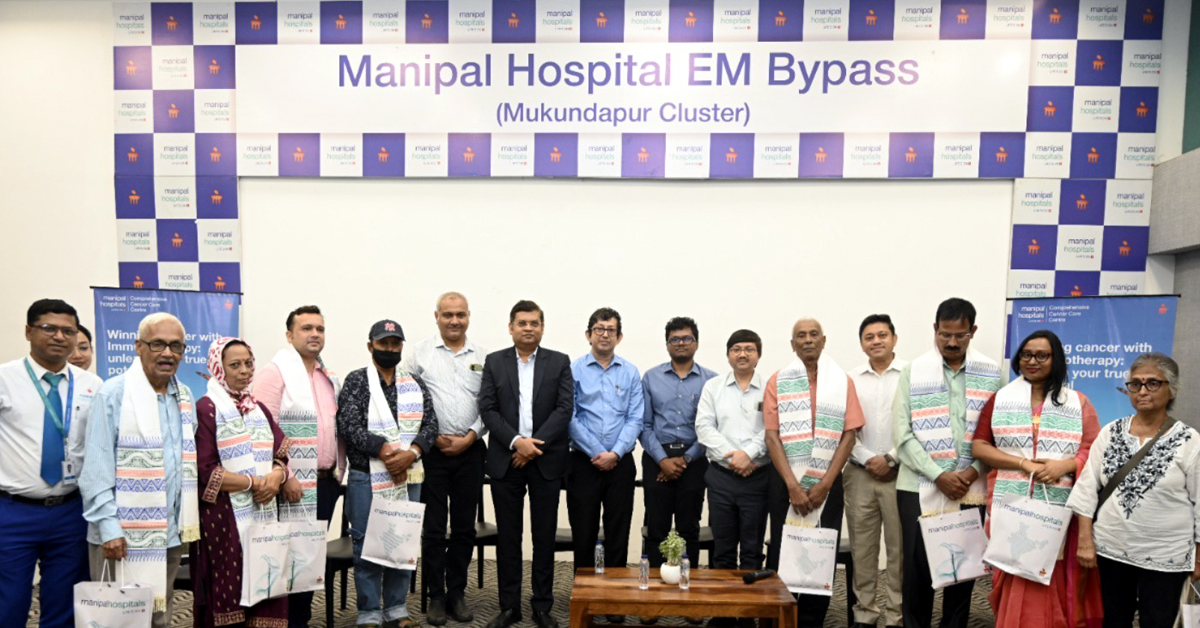
These experiences came into focus at a cancer survivors’ gathering organised by the Manipal Comprehensive Cancer Care Centre at Manipal Hospital, EM Bypass, in Kolkata on Wednesday. The programme, titled ‘Warriors of Life’, brought together cancer survivors undergoing or having undergone immunotherapy along with oncologists and critical-care specialists.
The event also featured a panel discussion on ‘Are We Close to a Cure for Cancer? Is Immunotherapy the Future?’, where doctors discussed how newer treatment approaches are changing cancer care and why immunotherapy cannot be treated as a one-size-fits-all solution.
The discussion included Dr Sudeep Das, HOD and Senior Consultant, Medical Oncology; Dr Pradip Kumar Mondal, Senior Consultant, Medical Oncology; Dr Tanmay Banerjee, Director, Critical Care Medicine; Dr Debdeep Samaddar, Associate Consultant, Medical Oncology; and retired Prof. (Dr.) Kalyan Bhattacharya.
Speaking about the growing use of immunotherapy, Dr Sudeep Das said the treatment has changed the way doctors approach selected cancer cases by using the patient’s immune system to recognise and attack cancer cells.
He, however, stressed that immunotherapy is not suitable for every cancer patient. The decision depends on factors including the cancer type and stage, molecular and immune markers and the patient’s overall clinical profile.
Dr Pradip Kumar Mondal said cancer treatment in India is changing rapidly, with immunotherapy becoming an important option in appropriate cases. He also pointed out that treatment decisions need to be individualised according to the characteristics of each patient’s disease.
The discussion also touched on the use of immunotherapy in lung cancer. Dr Tanmay Banerjee said advances in tumour biology and biomarker testing are helping doctors identify patients who may benefit from such treatment, while monitoring during therapy remains important.
According to Dr Debdeep Samaddar, immunotherapy has emerged as an important development over the past decade, particularly because it works by activating the body’s immune response against cancer cells. He also highlighted the potential role of domestically produced biosimilars in improving affordability and access to newer therapies.
For the patients attending the programme, however, the discussion was not limited to treatment options.
Sourav Matiya, 60, from Kharagpur, spoke about his experience after being diagnosed with Stage IV cancer. He said he had initially approached a cancer treatment facility in Mumbai but faced concerns over the waiting period before being referred to Manipal Hospital, EM Bypass.
Matiya underwent a combination of immunotherapy and chemotherapy along with regular monitoring. He said he has since been able to return to several everyday activities, including riding his motorcycle, grocery shopping and travelling with his family.
Another patient, Garfield Jude Pembro, 40, who is currently receiving immunotherapy, also shared his experience of continuing his daily routine during treatment. He said he is expected to complete his treatment cycle in March next year.
The patient experiences brought another aspect of cancer treatment into the discussion—what happens beyond the hospital and treatment room. For survivors and those undergoing long-term therapy, returning to family life, work, travel and everyday routines can become an important part of recovery and adaptation.
The Kolkata gathering therefore brought together two sides of the cancer conversation: the rapid development of newer therapies such as immunotherapy and the personal experiences of patients living through treatment.
While immunotherapy has produced significant responses in some cancers, doctors at the programme underlined that its effectiveness varies between patients and depends on the biology and characteristics of the disease. For patients, the journey continues to involve not only treatment but also regular monitoring and adapting to life after or alongside cancer.