12,000 Children, One New Puja Dress: ‘Sobar Pujo, Durga Pujo’ Returns for Its Fourth Year in Bengal
KOLKATA, October 3, 2026: For thousands of children across West Bengal, Durga Pujo is often associated with a simple but deeply cherished ritual — wearing a new dress and stepping out to experience the festival with family and friends.
That tradition was at the centre of a community initiative in Kolkata on Saturday, where more than 12,000 underprivileged children were provided with new clothes ahead of this year’s Durga Pujo.
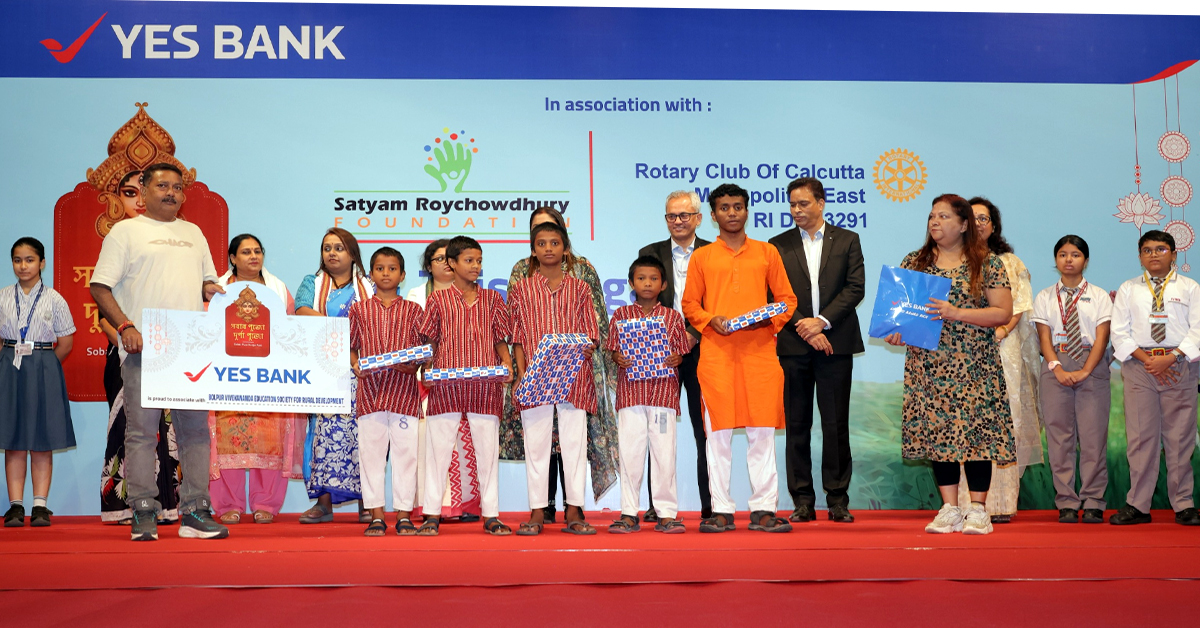
The fourth edition of ‘Sobar Pujo, Durga Pujo’, an initiative of YES BANK in association with the Satyam Roychowdhury Foundation and the Rotary Club of Calcutta Metropolitan East, was marked by a distribution programme at G.D. Birla Sabhaghar.
The initiative, which began four years ago, has grown from a relatively small community effort into a statewide programme. Organisers said the number of children reached this year has increased substantially, from around 4,700 in 2024 to 9,000 in 2025 and more than 12,000 in 2026.
But behind those numbers is a familiar Pujo experience that the organisers say they want to make accessible to children who might otherwise miss out on it.

From a Pujo tradition to a community movement
The idea behind ‘Sobar Pujo, Durga Pujo’ is rooted in the Bengali tradition of notun jama — new clothes worn during the festive season.
Over the past four years, the programme has brought together not just the organisations behind it, but also employees, schools, non-governmental organisations, corporate partners, housing societies, neighbourhood clubs and individual donors.
Their contributions have helped expand the reach of the initiative across different parts of West Bengal.
At Saturday’s programme, representatives of schools and NGOs joined community leaders, teachers, students, Rotary members and other guests for the distribution ceremony.
Rtn. Shyamashree Sen, Past District Governor Rotary and District Literacy Chair, attended the programme as the chief guest.
The gathering also brought together several of the community organisations involved in taking the initiative beyond a single corporate programme and into neighbourhoods and institutions across the state.
12,000 new clothes this year
According to the organisers, more than 12,000 new clothes are being distributed among underprivileged children this year.
The programme’s reported reach has grown steadily:
- 2024: 4,700 children
- 2025: 9,000 children
- 2026: 12,000-plus children
The increase comes at a time when Durga Pujo remains one of Bengal’s largest community celebrations, with clothing, food, neighbourhood gatherings and pandal-hopping forming an important part of the festive experience.
For children from economically disadvantaged families, however, the cost of participating in these traditions can be an added burden.
That is the gap the organisers say the programme is attempting to address — not simply by distributing clothing, but by ensuring that children can participate in a familiar part of the Pujo experience alongside their peers.
Four years of ‘Sobar Pujo’
What began four years ago has now become an annual pre-Puja activity involving a widening network of contributors.
YES BANK said the programme reflects its community outreach efforts in West Bengal, while the involvement of the Satyam Roychowdhury Foundation and Rotary Club of Calcutta Metropolitan East has helped bring local organisations and community groups into the initiative.
The programme’s organisers say they intend to expand its reach in the coming years and include more children across the state.
For now, the fourth edition has put more than 12,000 new Pujo outfits into the hands of children — a small intervention, perhaps, but one tied to a tradition that remains emotionally significant across Bengal.
Because in a state where Pujo is often measured in the scale of pandals, crowds and celebrations, the meaning of notun jama remains considerably simpler: having something new to wear when the biggest festival of the year arrives.