
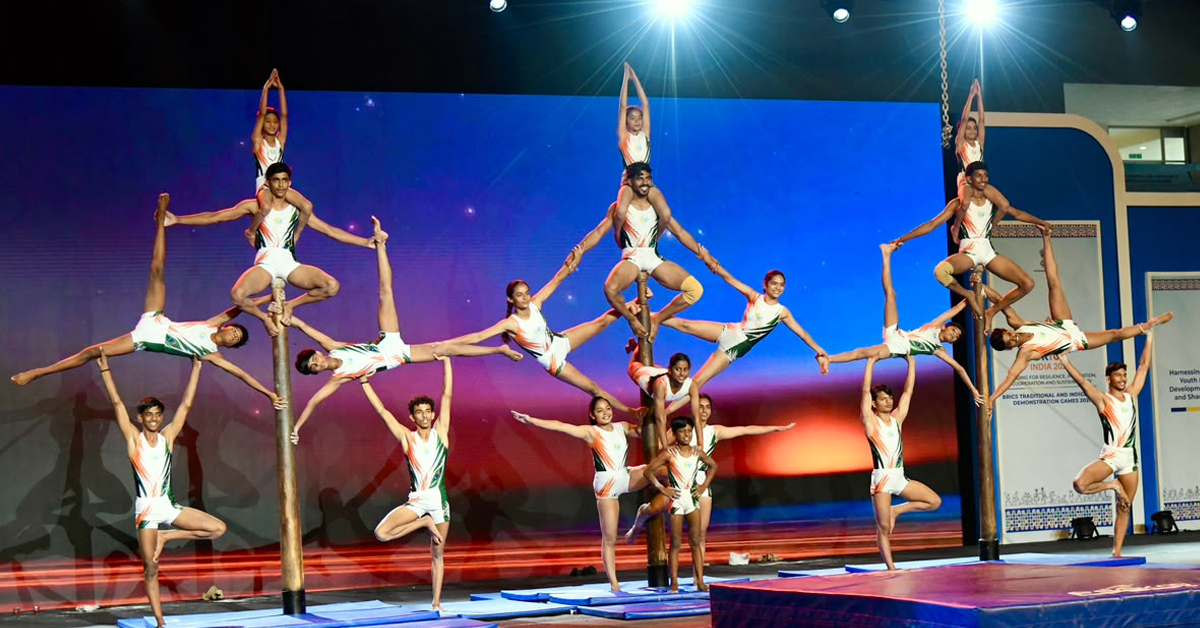
India’s 114-medal triumph at the World Yogasana Championships and a spectacular Mallakhamb performance put the spotlight on the country’s traditional sporting heritage as 10 nations came together in Ahmedabad.
Ahmedabad: India’s rich sporting heritage took centre stage at the inaugural BRICS Traditional and Indigenous Demonstration Games 2026 in Ahmedabad, where the country’s rhythmic yogasana and high-energy mallakhamb performances drew enthusiastic appreciation from international delegations, including China and South Africa.
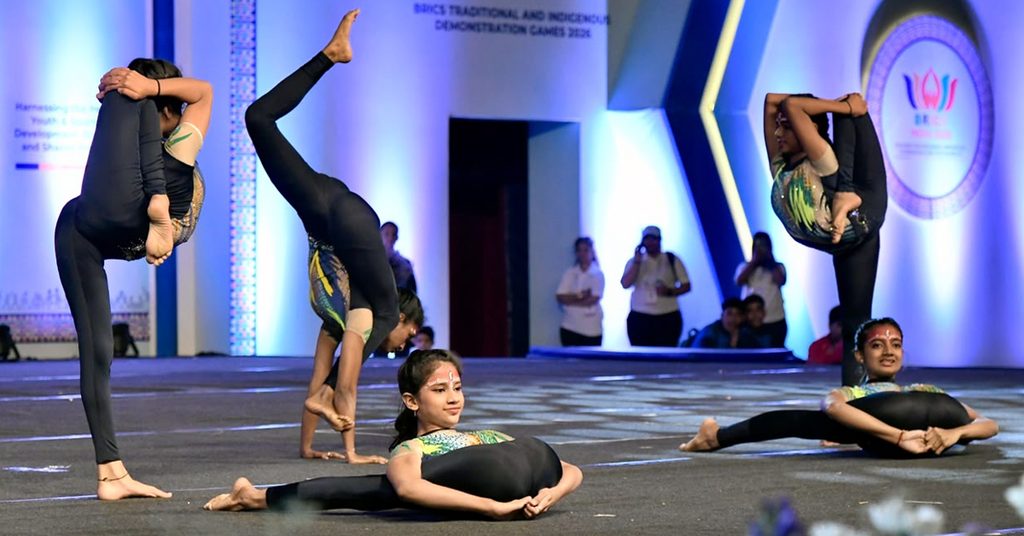
Held at the Veer Savarkar Sports Complex, the one-day event brought together nearly 160 participants from 10 nations, celebrating the diversity of traditional and indigenous sports while strengthening cultural ties through sporting exchange.
For India, the occasion was more than a demonstration of athletic ability. It was an opportunity to showcase traditional disciplines that combine physical strength, balance, flexibility, concentration and cultural identity before an international audience.
India’s Yogasana Captures International Attention
Among the most talked-about demonstrations was India’s rhythmic yogasana performance, which highlighted the discipline, flexibility and coordination of its practitioners. The display received particular attention from the Chinese and South African delegations, whose representatives expressed interest in learning more about the traditional Indian practice.
Philasande Macwili, Chef-de-Mission of South Africa, highlighted yoga’s growing relevance in his country, describing it as a practice embraced for stress relief, improved flexibility and overall physical well-being.
“Yoga is one of the activities in South Africa that people use to detox, relieve stress and improve movement and flexibility. We embrace it, and we love it,” Macwili told SAI Media.
He added that yoga demands considerable physical effort, with enthusiasts in South Africa practising it regularly.
China’s Chef-de-Mission, Yi Liu, also praised the opportunity to witness yogasana and learn about its practice.
“Today we looked and learned so much about Yoga. Even yesterday during practice, we saw young children practising the amazing movements. We want to learn so much more about it,” Liu said.
The reactions reflected the growing international interest in yogasana as a discipline that brings together traditional knowledge, athletic ability and physical fitness.
Mallakhamb Brings the Crowd to Its Feet
While yogasana showcased India’s balance and controlled movements, the country’s young mallakhamb contingent delivered a high-intensity demonstration that electrified the audience.
The performance drew a rousing response from the approximately 3,000 spectators gathered at the Veer Savarkar Sports Complex on Monday. The athletes demonstrated impressive strength, agility, coordination and control, reinforcing the appeal of one of India’s distinctive traditional sports.
Alongside yogasana and mallakhamb, India also presented kalaripayattu, the traditional martial art originating in Kerala.
Together, the three disciplines offered international visitors a glimpse into the diversity of India’s sporting heritage, from meditative movement and flexibility to demanding feats of strength and martial skill.
India’s Dominance at the World Yogasana Championships
India’s performance at the BRICS event comes against the backdrop of an impressive showing at the World Yogasana Championships held in Ahmedabad in June 2026.
According to the event information, Indian athletes won 114 medals, including 102 gold medals, underlining the country’s strong position in competitive yogasana.
A total of 31 nations won at least one medal, while 10 countries secured at least one gold medal, reflecting the sport’s expanding international participation.
The championships also saw participation from 79 nations and 522 athletes, with countries from the African continent among those represented.
Ahmedabad’s role as host of both the world championships and the BRICS demonstration games further highlighted its growing presence on the international sporting stage ahead of the 2030 Commonwealth Games, which the city is scheduled to host.
Traditional Sports Unite 10 Nations
The BRICS Traditional and Indigenous Demonstration Games brought together an extensive range of disciplines representing the cultural identities of participating countries.
India fielded the largest contingent, with 50 participants, followed by China with 30, Iran with 22 and South Africa with 14. Nearly 160 participants took part across the event.
The demonstrations included:
- India: Mallakhamb, Yogasana and Kalaripayattu
- China: Lion Dance, Wushu and Health Qigong
- South Africa: Kgati and Iintonga
- Brazil: Brazilian Jiu-Jitsu and Capoeira
- Russia: Sambo and Gorodki
- Kazakhstan: Asyk Atu, Togyzkumalak and Qazaq Kuresi
- Iran: Zoorkhaneh, Haft Sang and Ghanieh
- Belarus: Gorodki
- Bolivia: Lucha de Cholitas and Tinku
- United Arab Emirates: Altabbah
From China’s energetic wushu demonstrations to Kazakhstan’s strategic togyzkumalak and Brazil’s Brazilian Jiu-Jitsu, the event highlighted the remarkable variety of traditional sporting practices across participating nations.
Friendship Beyond the Sporting Arena
Beyond the demonstrations, the event created opportunities for athletes to exchange knowledge, learn new techniques and build relationships across national boundaries.
In one such moment, a Chinese wushu athlete was seen sharing techniques with wushu athletes from the Sports Authority of India’s National Centre of Excellence in Narayanpura, away from the main stage.
The informal interaction captured the spirit of the gathering, where traditional sports served not only as competitive and cultural showcases but also as a platform for learning and friendship.
International delegations also praised the hospitality extended to them during their stay in India.
Yi Liu said members of the Chinese delegation had been impressed by the warm reception, including the welcome they received at the airport despite arriving around midnight. He also spoke positively about the food, hospitality and overall experience, mentioning that the delegation had enjoyed trying dosa.
Russia’s Head of Delegation, Zlata Yakovleva, similarly expressed appreciation for the event and its organisation.
“Thanks to everybody for inviting us to such a great event,” Yakovleva told SAI Media, describing the hospitality as excellent and highlighting the friendship among BRICS countries as one of the event’s most memorable aspects.
India’s Traditional Sports Make a Global Statement
The inaugural BRICS Traditional and Indigenous Demonstration Games 2026 demonstrated how sport can bring countries together through shared cultural experiences.
For India, the appreciation shown by international participants for yogasana, alongside the crowd’s enthusiastic response to mallakhamb, offered a valuable platform to showcase homegrown sporting traditions to a global audience.
As Ahmedabad prepares for the 2030 Commonwealth Games, events of this nature also provide an opportunity to broaden international awareness of India’s traditional disciplines.
The message from the day was clear: traditional sports are not merely reminders of the past. They remain living expressions of culture, athletic excellence and international friendship, with the potential to inspire new generations across the world.


