
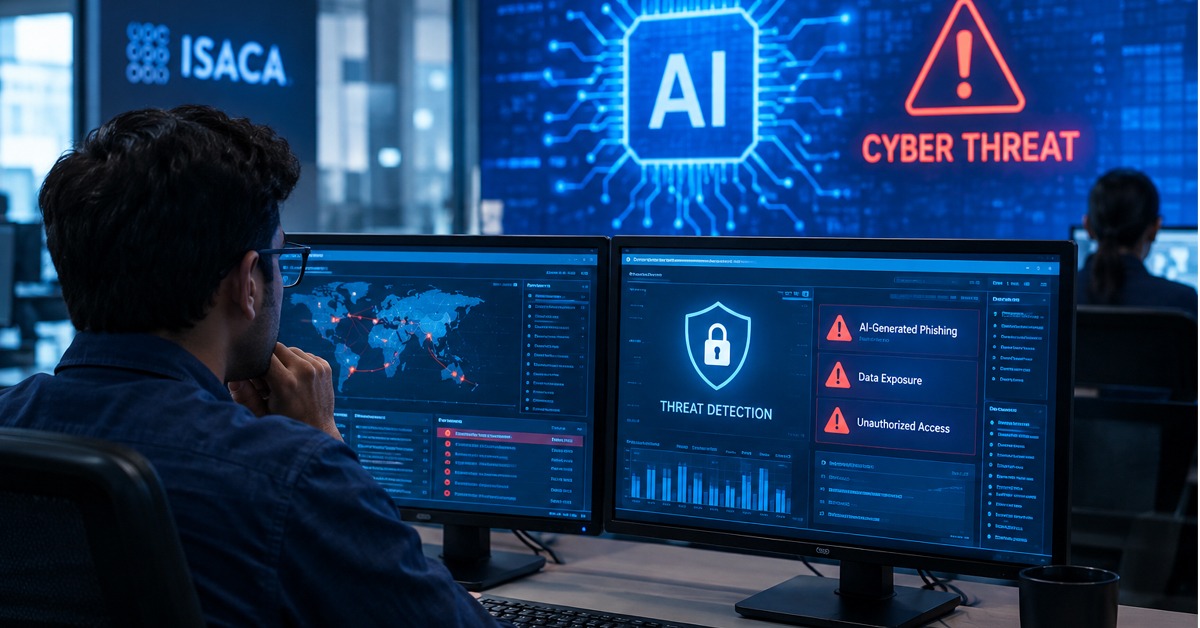
Bengaluru: Indian organisations are rapidly expanding the use of artificial intelligence in cybersecurity, but many are yet to put adequate systems in place to respond to AI-related cyber incidents, according to the 2026 State of Cybersecurity survey by ISACA.
The survey found that only 21% of organisations in India regularly conduct AI-specific incident response exercises, while 49% have not conducted any AI-related response exercise so far.
The findings are based on responses from more than 1,800 cybersecurity professionals globally, including 147 respondents from India. The study examined cybersecurity hiring, staffing, budgets, cyber threats and the growing role of AI in security operations.
AI use rises, preparedness remains limited
AI is increasingly becoming part of day-to-day cybersecurity operations in India. Only 10% of respondents said they do not use AI in their security operations.
The most common applications include automating routine security tasks (53%), threat detection and response (52%) and endpoint security (40%). The use of AI for routine security tasks and automated threat detection has increased from 2025, according to the survey.
However, organisations appear to be less prepared for incidents involving AI systems.
Around 35% of India-based respondents either said their organisation does not have AI incident-response playbooks or were unsure whether such playbooks exist. Among the incidents identified in the survey were AI-enabled phishing, fraud and social engineering, sensitive data exposure through AI systems, and unauthorised access to AI systems, models or data.
At the same time, 34% of Indian respondents identified LLM SecOps as a cybersecurity skills gap, up 10 percentage points from the previous year.
More than half of the respondents—51%—said they or members of their teams are involved in developing, onboarding or implementing AI solutions within their organisations. The figure was 46% in 2025 and 27% in 2024.
Cybersecurity workforce under pressure
The survey also points to rising pressure on cybersecurity teams.
About 57% of respondents in India said their work has become more stressful compared with five years ago. The increasingly complex threat landscape was cited as the main reason by 71% of respondents, compared with 59% in 2025.
Staffing remains another concern. Forty-two per cent of Indian organisations said their cybersecurity teams are understaffed, while 56% reported having open cybersecurity positions. In addition, 66% said they face difficulties retaining qualified cybersecurity professionals.
High work stress was identified as the leading reason for employees leaving cybersecurity roles, cited by 46% of respondents. Limited promotion and development opportunities followed at 44%.
Despite these challenges, 54% of Indian respondents said they were completely or very confident in their organisation’s ability to detect and respond to cyber threats. This compared with 42% globally.
Skills and training become key focus
Organisations are increasing efforts to address cybersecurity skills shortages. The survey identified soft skills (46%), ML SecOps (43%), scripting and automation (41%) and data security (36%) among the major skills gaps, alongside LLM SecOps.
Critical thinking was the most sought-after soft skill, cited by 56% of respondents, followed by problem-solving at 52% and communication skills at 48%.
To address these gaps, organisations are relying on online learning platforms and mentoring, while 46% of cybersecurity teams are increasing their use of AI or automation for technical skills development.
The survey also found that employers are using measures such as professional development training, certification support and flexible working arrangements to support cybersecurity staff and improve retention.
The findings highlight a growing disconnect between the pace at which AI is being adopted and the level of preparedness for AI-specific cyber incidents. For Indian organisations, the survey points to incident-response testing, AI-focused playbooks and specialised skills development as areas receiving increasing attention as AI becomes more deeply integrated into cybersecurity operations.