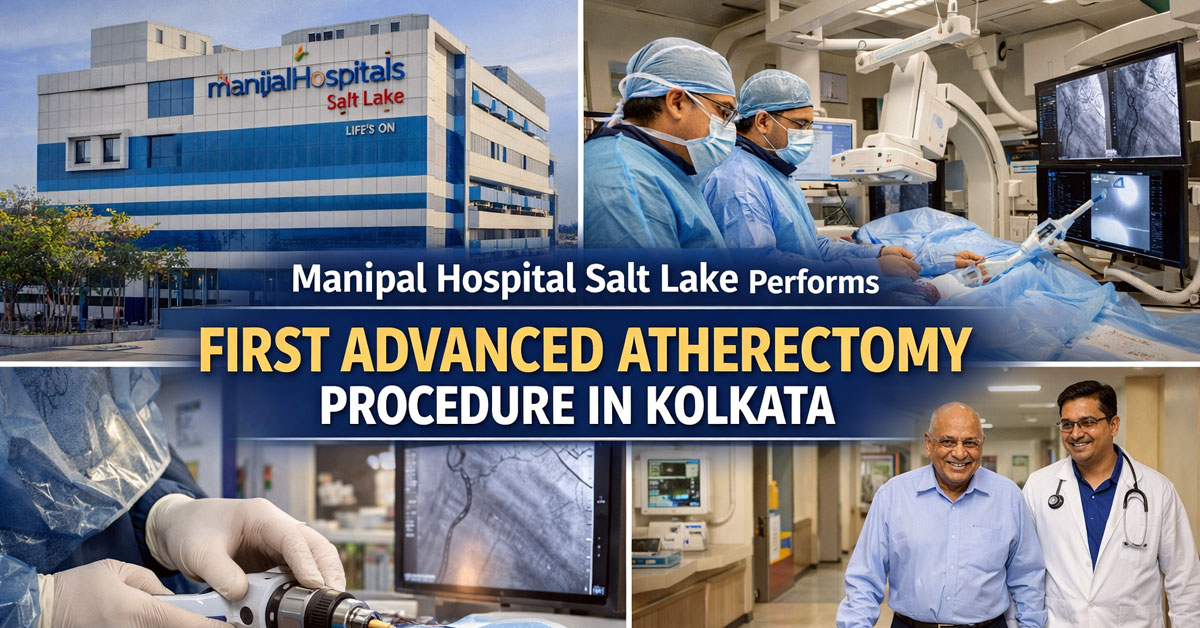
Kolkata : In a significant advancement in vascular care, Manipal Hospital has successfully performed its first advanced atherectomy-assisted procedure for Peripheral Artery Disease (PAD) in Kolkata. The minimally invasive intervention was led by Dr. Ranjan Kr. Sharma, Senior Consultant – Cardiology and enabled a 75-year-old patient to regain pain-free mobility within just 24 hours.
The patient, who had undergone coronary angioplasty 11 years ago with stents placed in the Left Anterior Descending (LAD) artery and the Right Coronary Artery (RCA), recently began experiencing breathlessness and severe pain in his left leg while walking. This symptom—known as claudication—is a hallmark of Peripheral Artery Disease, a condition caused by narrowing or blockage of leg arteries due to fatty plaque and calcium buildup.
A fresh angiography revealed that while the previous heart stents were functioning well, a new blockage had developed beyond the earlier stent in the RCA. More critically, doctors identified two severe blockages (70–80% and 90%) in the left superficial femoral artery, the main blood vessel supplying the leg. One of these blockages was heavily calcified, making conventional treatment risky.
The cardiac team first performed a routine coronary angioplasty to restore optimal blood flow to the heart. However, treating the leg artery required a more sophisticated solution. Unlike coronary arteries, leg arteries are subjected to constant bending, pressure, and movement, making permanent stenting less durable in the long term.
To address this challenge, the team deployed a state-of-the-art atherectomy device—used for the first time at the Salt Lake facility. The device features a high-speed, drill-like rotating tip that precisely removes hardened cholesterol and calcium deposits from the artery walls. A built-in suction mechanism simultaneously clears the debris, preventing it from traveling to smaller blood vessels. This process prepares the artery for safer balloon angioplasty while significantly reducing the need for permanent stent placement.
Explaining the benefits, Dr. Sharma said:
“In patients with severe calcium buildup, balloon inflation alone can damage the vessel and may force us to place a stent. Atherectomy allows us to remove hardened plaque first, making the procedure safer, reducing complications, avoiding unnecessary stenting, and ensuring better long-term outcomes. Earlier recurrence rates were around 15–20%, but with this advanced technology, they can drop to less than 2–3%.”
He added that lifestyle-related diseases are driving a sharp rise in PAD cases. The condition is more common among people with diabetes, hypertension, high cholesterol, and a history of smoking. Studies indicate that nearly 20% of patients with coronary artery disease also develop PAD. Since symptoms are often mistaken for nerve or muscle pain, diagnosis is frequently delayed, sometimes progressing to limb discoloration or even gangrene. Early detection and advanced treatments like atherectomy can prevent serious complications and significantly improve quality of life.
The additional atherectomy step took only 15–20 minutes and required a small groin puncture for arterial access. The patient was monitored for 24 hours and discharged the next day with advice to resume normal activities almost immediately.
Expressing his relief, the patient, Nabin Das (name changed), said:
“Walking had become painful and stressful. I was worried about losing my mobility. After the procedure, I feel comfortable and confident again. I am thankful to the doctors for giving me back my active life so quickly.”
With the introduction of advanced atherectomy technology, Manipal Hospital, Salt Lake further strengthens its comprehensive cardiac and vascular care services, offering safer procedures, faster recovery, and improved long-term outcomes for patients across Eastern India.
If you want, I can also:
- Create a short press release (200–250 words)
- Write headline + slug + meta description for digital portals
- Prepare a Hindi or Bengali version
- Generate social media captions for hospitals or health pages