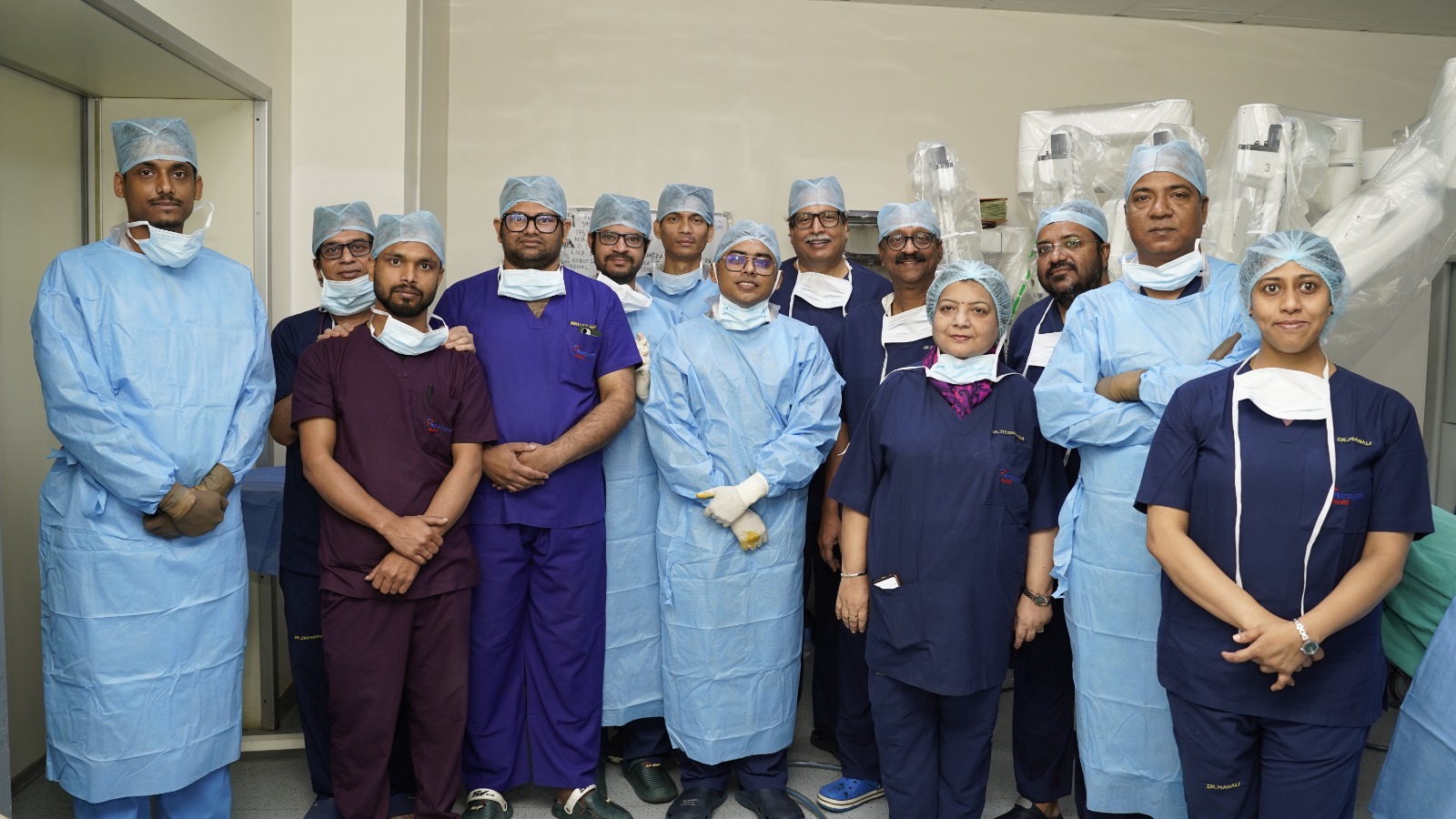
Kolkata : In a significant breakthrough in advanced renal care, a specialist team at Narayana RN Tagore Hospital has successfully completed more than 30 robotic kidney transplants in obese patients, the highest number reported in Eastern India. The achievement marks a major advancement in treating high-risk Chronic Kidney Disease (CKD) patients who often face complications during conventional transplant procedures.
The hospital also recorded another rare milestone by successfully conducting an open kidney transplant under regional anaesthesia on a 51-year-old patient who was unfit for general anaesthesia. Remarkably, the patient remained conscious throughout the procedure, highlighting the growing possibilities of complex transplant surgeries.
India continues to witness a rapid rise in obesity and diabetes, two major contributors to Chronic Kidney Disease. Every year, nearly two lakh new CKD cases are reported, with many eventually requiring kidney transplantation. However, obesity often increases surgical risks and post-operative complications, limiting treatment options for several patients.
The introduction of robotic-assisted transplantation using the Da Vinci Surgical System is helping overcome these challenges. The technology enables surgeons to perform procedures with smaller incisions, reduced wound infections, faster recovery, and shorter hospital stays. Patients are often able to mobilise within 24 hours after surgery, improving overall recovery outcomes.
Speaking on the achievement, Dr. Tarshid Ali Jahangir said that obesity significantly raises the risk of complications during traditional kidney transplantation. According to him, robotic surgery helps minimise these risks, although the procedure remains technically demanding due to delicate vascular suturing and the need to reduce operative time.
Dr. Satyadip Mukherjee highlighted the importance of multidisciplinary coordination in handling advanced transplant cases. He stated that robotic transplantation in high-risk patients requires seamless teamwork between donor and recipient teams, surgeons, anaesthesiologists, and support staff to ensure successful outcomes.
One of the most challenging cases involved a 51-year-old patient suffering from severe respiratory complications who could not be administered general anaesthesia. Doctors carried out the transplant under spinal and epidural anaesthesia while the patient remained awake during the surgery. Despite difficulties caused by respiratory movement and the lack of complete abdominal relaxation, the team successfully completed the transplant with stable graft function and early recovery.
Abhijit C. P. said the milestone demonstrates how clinical innovation and integrated healthcare teams can address complex health challenges such as obesity-linked kidney disease.
Echoing the sentiment, R. Venkatesh noted that innovations like robotic transplantation are expanding access to safe surgical care for patients who previously had limited treatment options.
The achievement reinforces Narayana Health’s growing leadership in advanced transplant medicine and highlights the evolving role of robotic surgery in improving outcomes for high-risk kidney patients across India.