
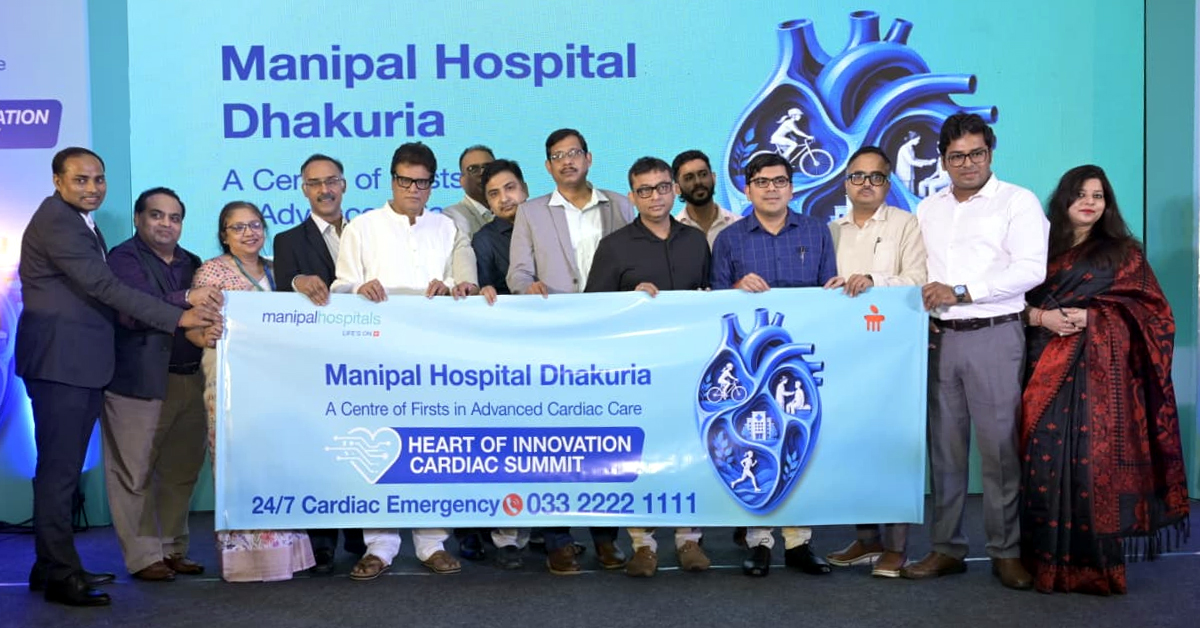
Kolkata: A heart attack may be only the beginning of a longer cardiac battle if warning signs are ignored and treatment is delayed, doctors said at a cardiac health summit organised by Manipal Hospital Dhakuria ahead of World Heart Day.
The hospital hosted the ‘Heart of Innovation Cardiac Summit’ on Wednesday, bringing together cardiologists, cardiac surgeons and patients who have undergone different cardiac procedures. The central discussion focused on a growing concern in cardiac care — how heart disease can gradually progress from a heart attack to heart failure.
The programme also featured CPR training, a cardiac quiz and an interactive session aimed at addressing common misconceptions about heart disease.
During the panel discussion on “Heart Attack slowly turning to Heart Failure — an epidemic?”, specialists from Manipal Hospital Dhakuria discussed the importance of identifying cardiac symptoms early and ensuring timely intervention.
Dr Prakash Kumar Hazra, Senior Consultant and Head of Cardiology, said advances in interventional cardiology have changed the treatment of several complex heart conditions, with catheter-based procedures allowing doctors to treat many patients without conventional open-heart surgery.
However, he stressed that advanced technology cannot replace timely medical attention.
“Intervening before a cardiac event causes irreversible damage to the heart is important,” Hazra said, highlighting the need for patients to recognise symptoms early and seek treatment without delay.
The summit also brought attention to the changing role of cardiac surgery. Dr Kaushik Mukherjee, Consultant, Cardiothoracic and Vascular Surgery, said developments in minimally invasive cardiac surgery are helping appropriately selected patients undergo complex procedures with reduced physical impact and faster recovery.
He said cardiac treatment increasingly requires coordination between intervention, surgery and post-operative care rather than relying on a single treatment approach.
One of the most striking accounts at the summit came from 32-year-old Doman Sonkar, who has been dealing with a cardiac condition since childhood. Diagnosed with familial hypercholesterolaemia, a genetic condition associated with persistently high cholesterol, Sonkar said he has been hospitalised around 10–12 times for chest pain and has undergone multiple angioplasties.
According to Sonkar, seven to eight stents have been placed in his heart over the years to maintain blood flow.
Despite repeated cardiac procedures, he said he continues to lead his life and remains hopeful that newer medicines and technologies will offer better options for patients with similar conditions.
He also credited Dr Hazra for supporting him through repeated episodes of treatment.
The event began with a CPR training session conducted for attendees under the guidance of Dr Ashok Mishra, Consultant, Emergency Medicine. A cardiac quiz later saw enthusiastic participation from patients and other attendees.
Actor Rajesh Sharma and Kolkata-based model and actor Dipanjan Basak also attended the programme as special guests and spoke about the importance of taking cardiac health seriously.
Hospital Director Dilip Kumar Roy said the summit was designed around patients who had undergone cardiac treatment and subsequently returned to their everyday lives.
The programme comes ahead of World Heart Day on September 29, with this year’s theme, “Don’t Miss a Beat,” focusing on awareness of cardiovascular disease and the importance of timely action.
Doctors at the summit also pointed to hypertension, diabetes, obesity and physical inactivity as important risk factors for cardiac complications. The message from the discussions was clear: surviving a cardiac event does not necessarily mark the end of the problem, and continued monitoring, treatment and lifestyle management remain important in preventing further deterioration.
Manipal Hospital Dhakuria currently provides round-the-clock emergency cardiac care along with interventional and surgical facilities, including angioplasty, TAVI/TAVR, TEVAR, leadless pacemaker procedures, electrophysiology and ablation procedures, CABG and minimally invasive cardiac surgery.